


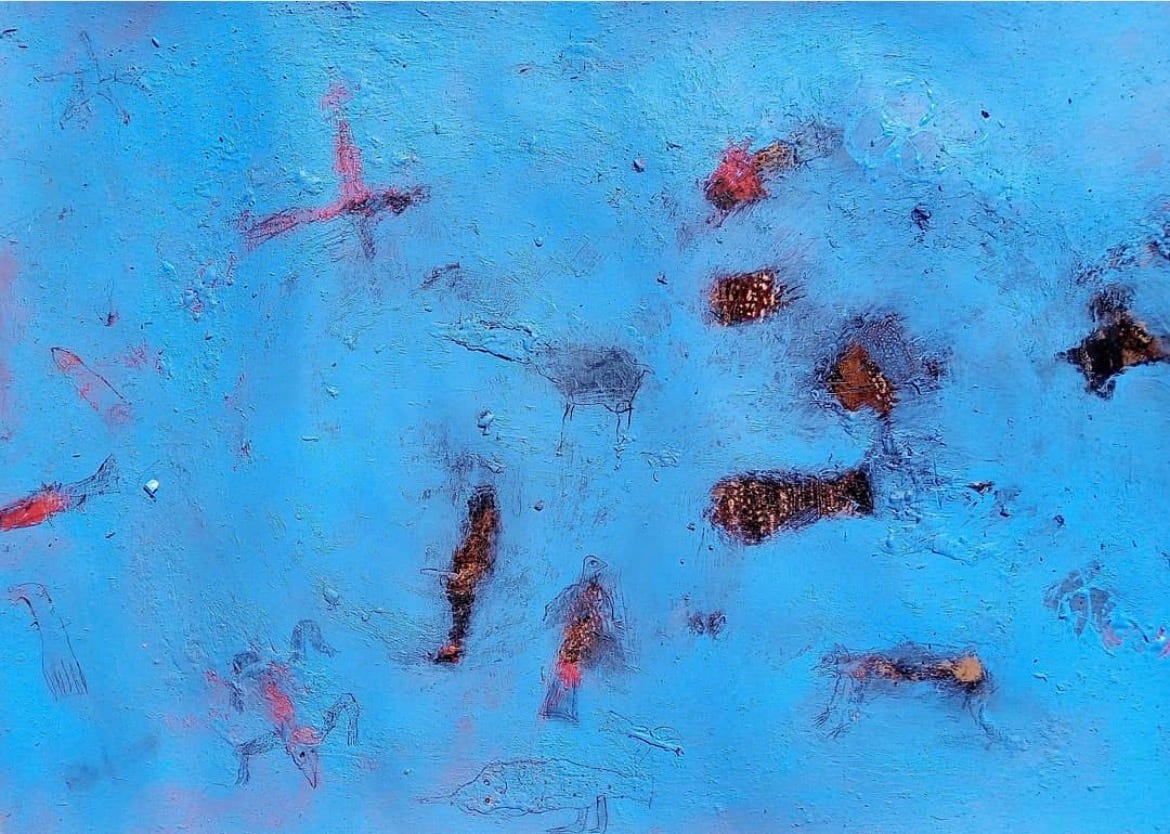
Title: Espiritus de la presa, mix media on paper (35.4 × 24.6 in) 2021.
Rafael Monroy Arteaga, born on September 19, 1997. A native of the Mezquital Valley a vast semi-desert region in the state of Hidalgo, Mexico. It is famous for its rich Otomi (Hñähñu) heritage, pre-Hispanic cuisine, and abundant hot springs.
Rafael Monroy's artistic practice unfolds at the intersection of art, architecture, and territory. Through painting, drawing, sculpture, and installation, his work investigates the relationships between landscape, memory, and materiality, conceiving of territory as a living system of cultural, geological, and historical traces.
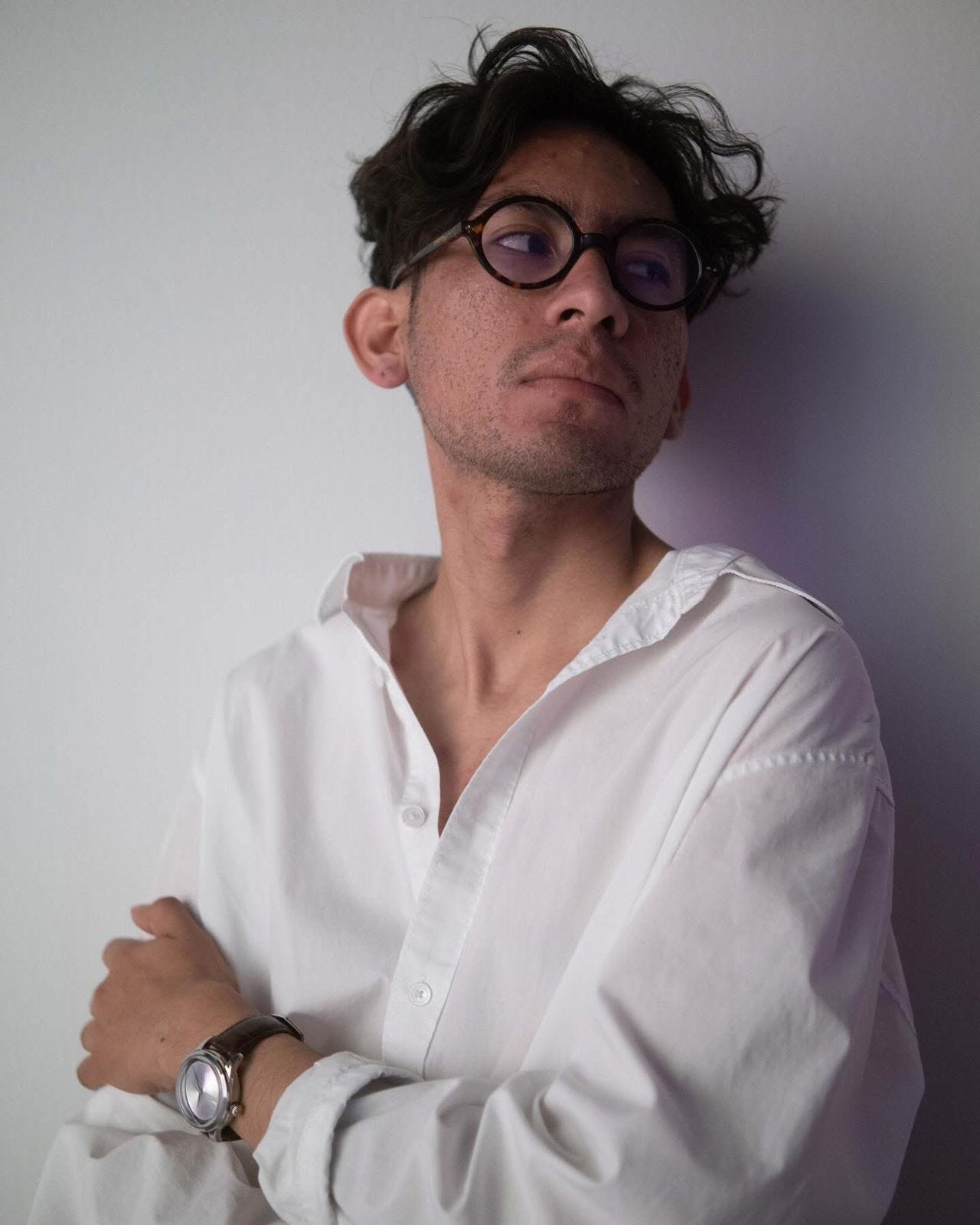
The Mezquital Valley, where he was born and raised, forms one of the central axes of his artistic inquiry. Rather than offering a documentary representation of the landscape, Monroy seeks to reveal the invisible strata that constitute the territory: collective memory, extractive histories, cultural remnants, and ecological processes embedded within the material world. From this perspective, his work occupies a space between speculative archaeology, poetic cartography, and material experimentation.
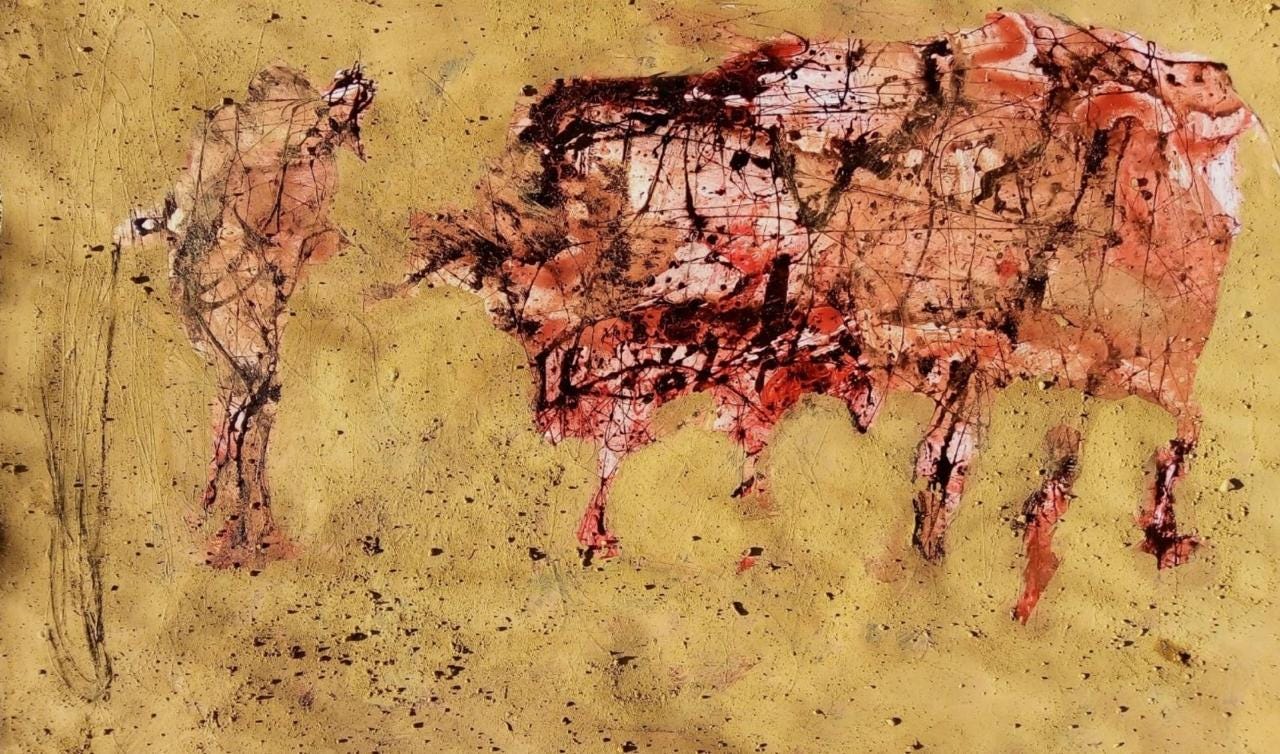
Title: El robabecerros, mix media, earth and enamel on paperon paper (49.2 × 35.4 in) 2021.
Monroy’s training as an architect has profoundly shaped his artistic practice, equipping him with methods of spatial analysis, territorial observation, and project-based thinking. This hybrid perspective enables him to develop a visual language that moves fluidly between object-making, material research, and the construction of imaginaries rooted in the contemporary landscape.
In 2024, he founded Laboratorio XIDE, a transdisciplinary platform dedicated to the research and production of projects at the intersection of visual art, architecture, landscape, and material culture. Through this initiative, he advances new approaches to the relationship between artistic practice, territory, and situated forms of knowledge.
His work is held in private collections in Mexico and abroad, including the Thomas Settel Eugene Collection (New York–Guanajuato) and the Darío Sandoval Collection (Guadalajara). Throughout his career, he has participated in numerous exhibitions and projects within the field of contemporary art.
Monroy currently lives and works in the Sierra de Santa Rosa, Guanajuato, where he is developing a new body of research centered on the study of clays, minerals, and other materials sourced directly from the surrounding landscape.
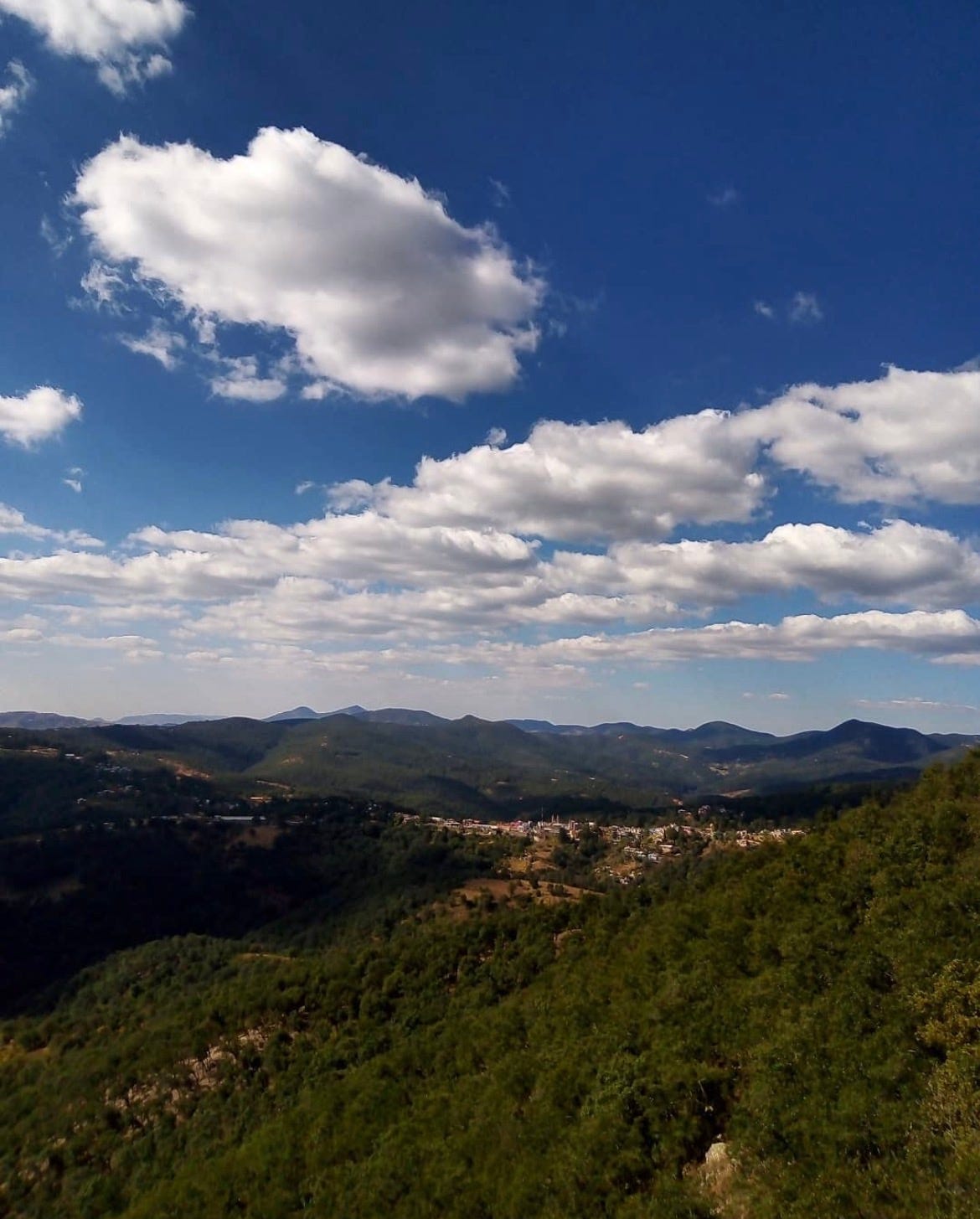
Rafael Monroy's work offers a meditation on the ways in which territories generate memory and meaning, positioning material as a medium capable of revealing the complex relationships between geography, history, and imagination.
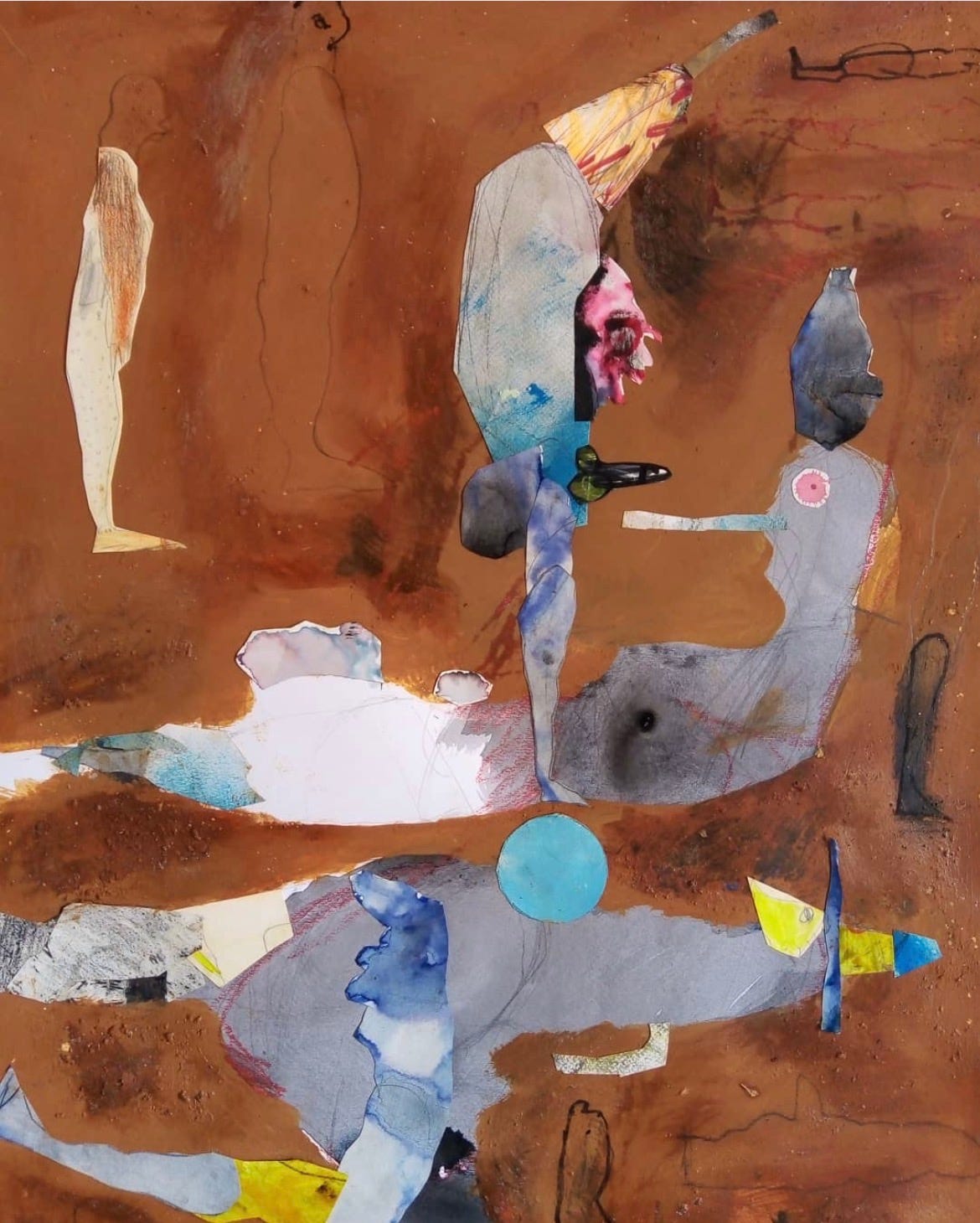
Title: Jolgorio I, mixed earth on paper (19.7 × 27.6 in) 2021.
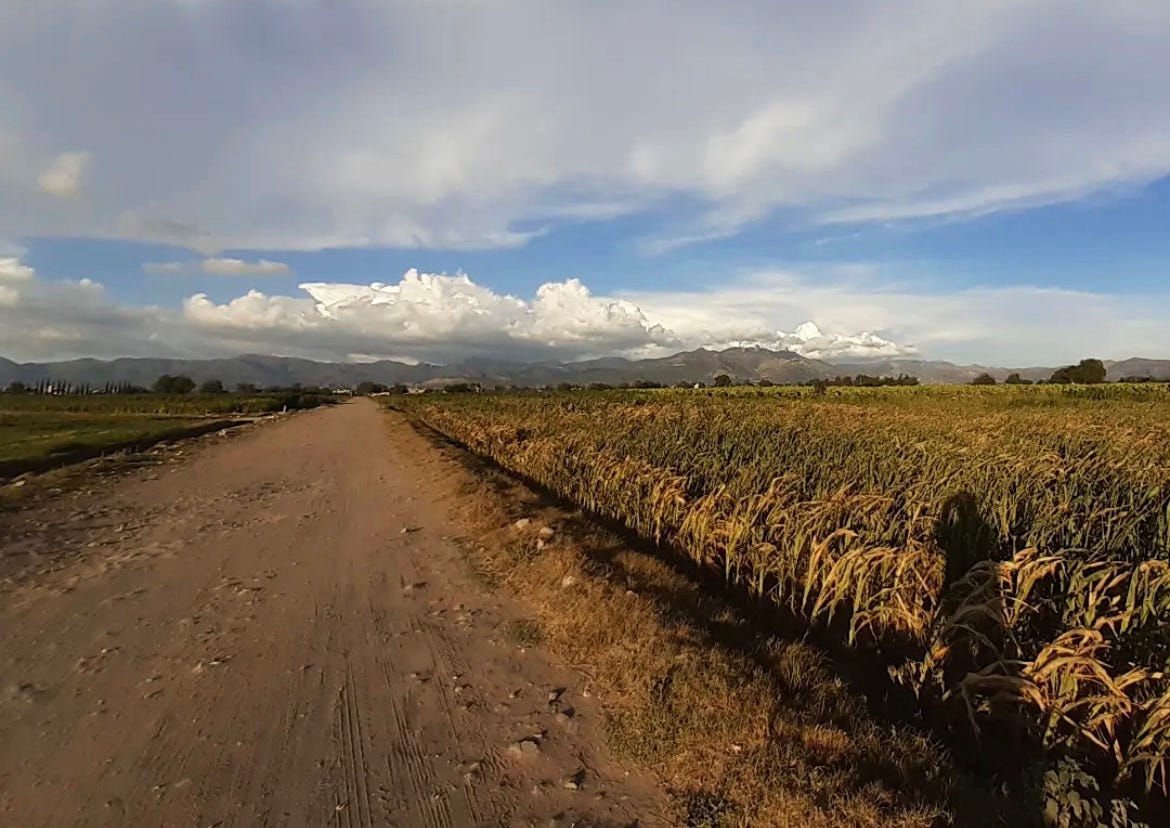
The Valley region was conquered by the Spanish around 1520, after which the Otomi population suffered constant interference from conquistadors and religious authorities. Despite this, the Otomi devised strategies that allowed them to preserve their culture and language. After the Conquest, the economy in the Mezquital Valley revolved around three activities: agriculture, livestock raising, and mining.
Language
The Otomi language belongs to the large Oto-Manguean linguistic family. Within this family, there are several linguistic groupings: Mazatec, Matlatzinca, Chatino, Mixtec, Cuicatec, Zapotec, Triqui, Otomi, Chinantec, Mazahua, Amuzgo, Tlapanec, Popoloca, Chochotec, Chichimec Jonaz, Pame, and Ixcatec.
In turn, the Otomi linguistic group has the following linguistic variants:
ñuju – Otomi of the Sierra
hñäñho – Northwestern Lowland Otomi
ñathó – Western Otomi
ñohño – Western Otomi of the Mezquital Valley
hñahñú – Otomi of the Mezquital Valley
Territory
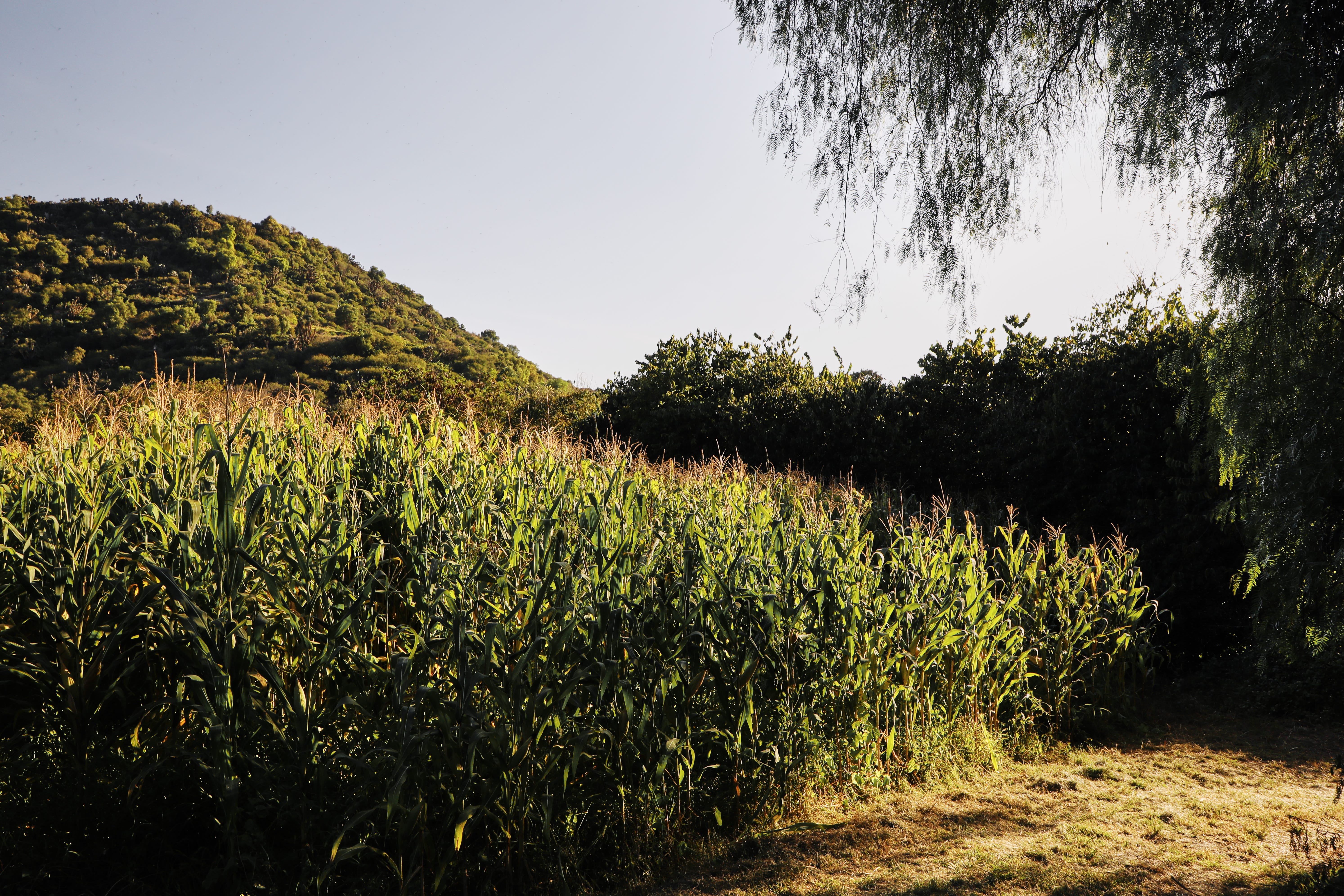
Today, the Otomi people inhabit the region known as the Mezquital Valley, located in the central part of the state of Hidalgo. This region is divided in half by the San Miguel mountain range, which in turn branches into different elevations: to the north, the Ixmiquilpan Valley; to the south, the Actopan Valley; and slightly lower, to the northwest, a plain that includes the northern part of the municipality of Ixmiquilpan and El Cardonal.
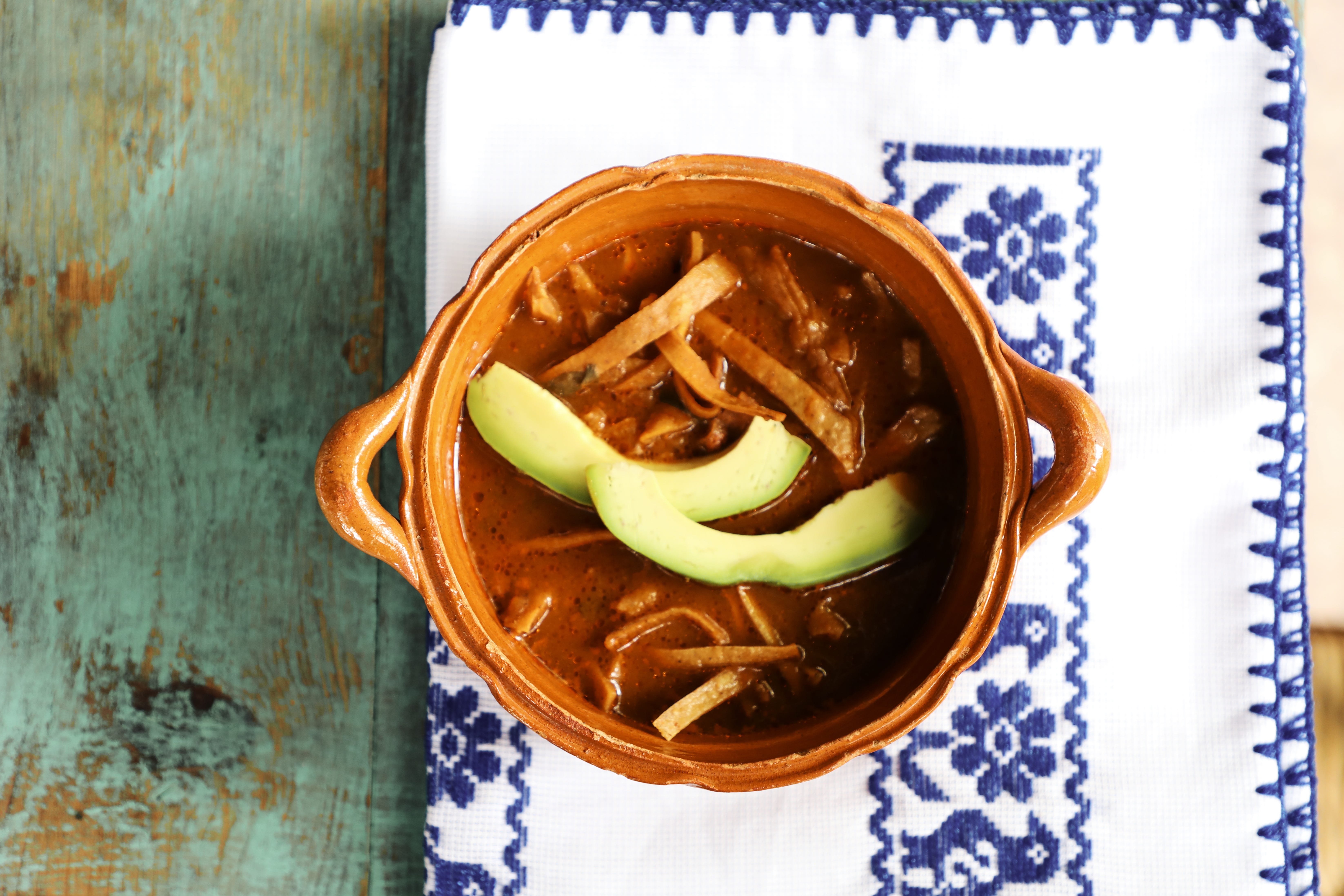
The cuisine of the Mezquital Valley stands out for its Hñähñú (Otomi) heritage and its ingenuity in making use of the flora and fauna of the semi-desert. Its main principle states that “everything that runs, flies, crawls, or blooms goes into the pot,” using insects, flowers, and ancestral agave pads (pencas).
Rafael Monroy’s work suggests that the earth not only provides the natural resources for our food, but also for the creation of art.
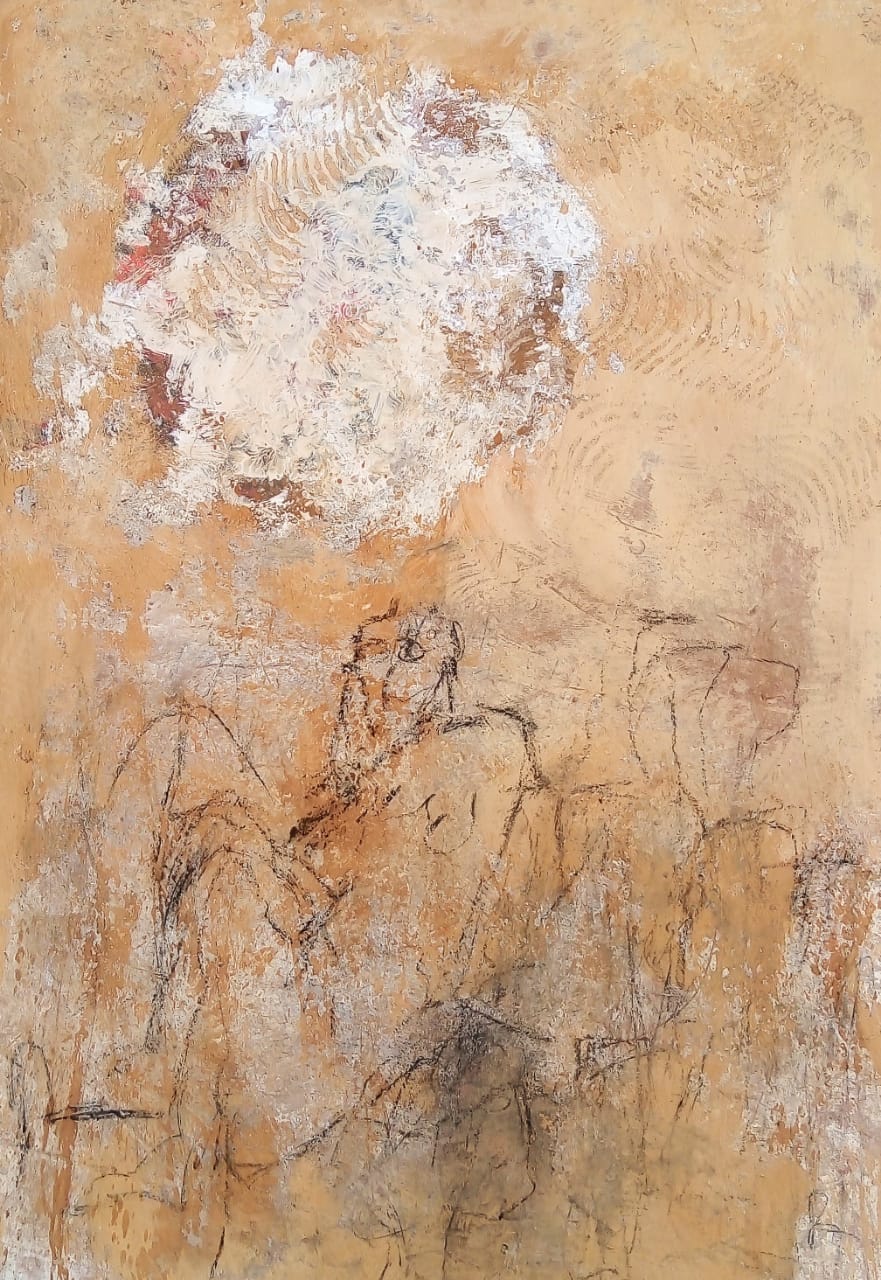
Title: Buscando sanación mix media and charcoal on paper (24.0 × 35.4 in.) 2022.
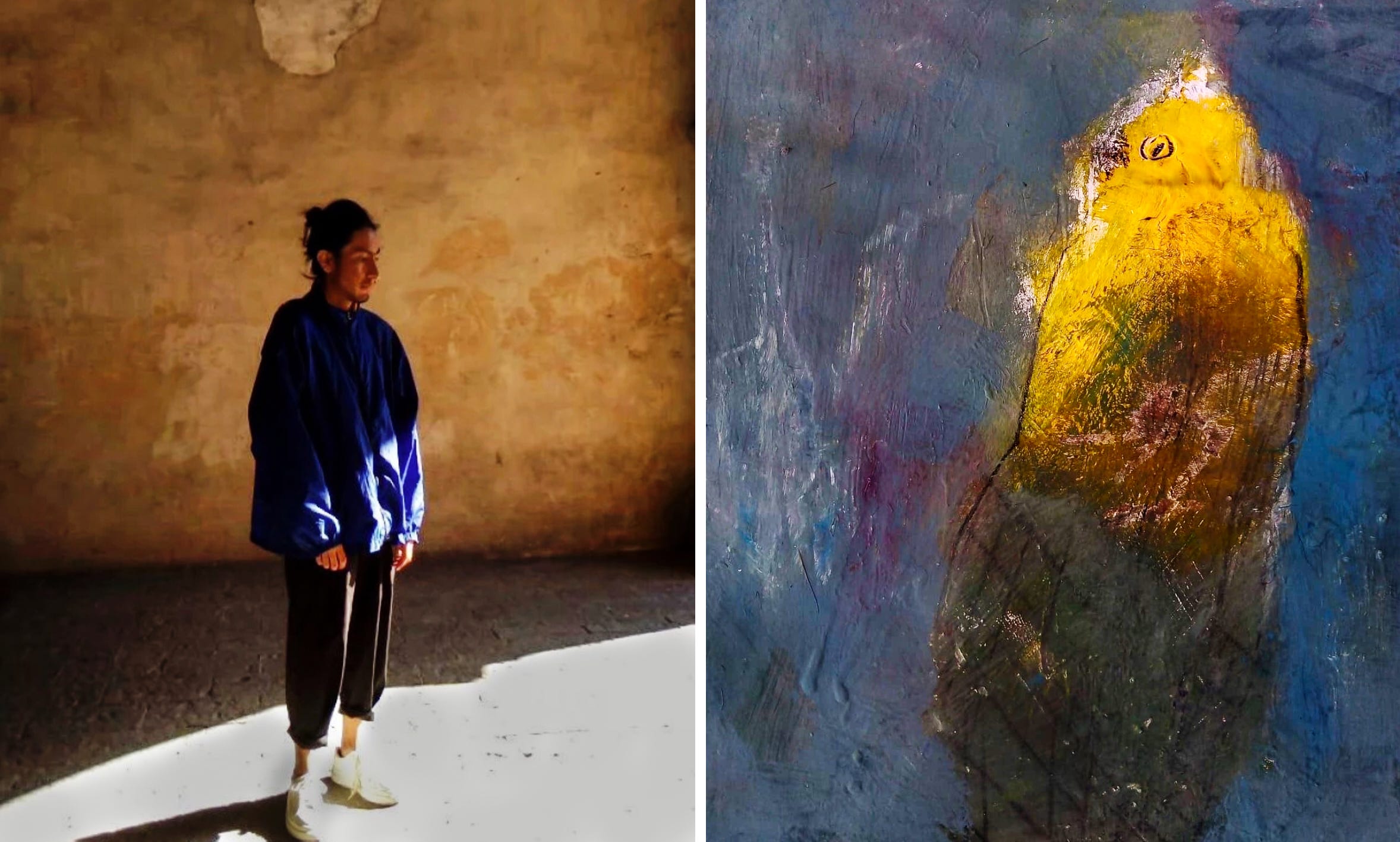
Rafael Monroy Arteaga Visual Artist and Architect, trained at the European Cultural Center. He is currently developing the research project “Bioethics Viewed and Applied to New Work Environments,” with the focus areas of architecture and bioethics, applying it to the following prototype:
TRUKU, a community-urban coworking space.
Rehabilitation of existing structures
Actopan, Hidalgo, Mexico.
LABORATORIO XIDE + Mauricio Ponce + Jaime Alberto Cruz Ramírez.
Contact: rafaelmonroytaller@gmail.com / laboratorioxide@gmail.com
Instagram: @raafaelmonroy
Image credits for the artist’s works Rafael Monroy Arteaga.